
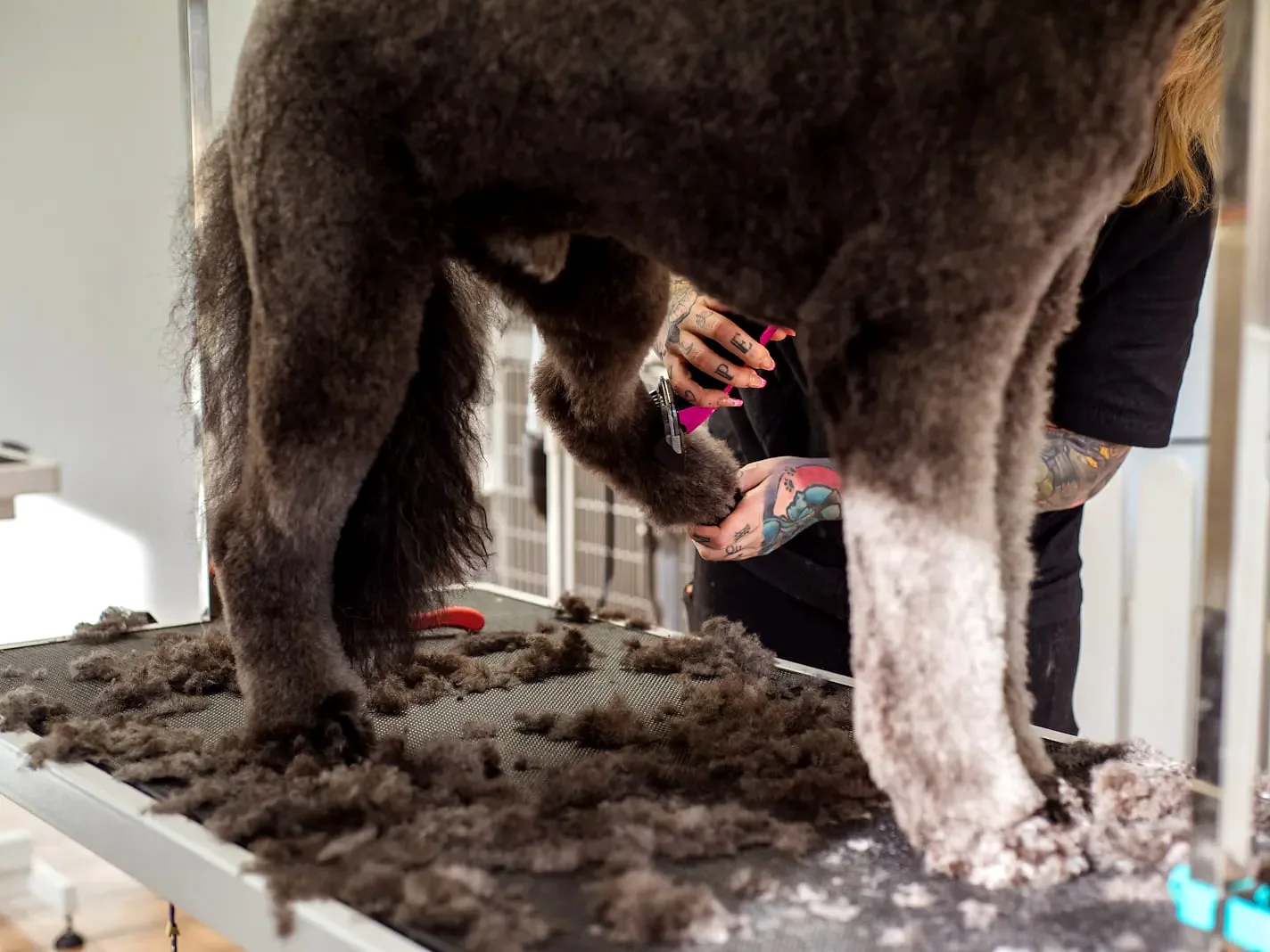
A lot of dog owners bring their dogs to us for the first time expecting the worst. They've heard stories about dogs thrashing on the table, shaking for days after, or refusing to get in the car when it's grooming day. The truth is that most dogs don't hate grooming itself. They hate being unprepared for it. There's a real difference. A dog that's been conditioned to accept handling, nail trims, and water feels calm on the grooming table. A dog that's never been touched that way before will panic. If your dog is one of the anxious ones, there are concrete steps you can take before the appointment and during it that actually work.
Start handling your dog at home, right now
The single biggest thing you can do is get your dog used to being touched in ways that mimic grooming. This doesn't require a professional. Run your fingers through your dog's coat daily, especially around the ears, paws, and face. Touch their paws deliberately. Lift their ears. Open their mouth and look at their teeth. None of this needs to be rough or long. Thirty seconds of gentle handling each day builds tolerance fast. Dogs that have never had their paws handled will naturally pull away when a groomer tries to trim nails. Dogs that have had their ears touched at home stay calm when water runs near them.
Introduce water gradually if it's the main issue
Some dogs panic at the bath itself, not the grooming that follows. If that's your dog, start small. Run the sink in the bathroom while your dog is in the room. Let them get used to the sound. The next day, turn it on and let them see water running. A week later, wet a washcloth and rub it on their coat while they're standing on the kitchen floor. You're not trying to bathe them. You're just building comfort with the sensation. By the time they come to us, water feels familiar instead of scary.
Tell us the whole story before the appointment
When you call or come in to book, mention that your dog gets nervous. Don't downplay it. Tell us what specifically sets them off. Is it the noise of the dryer. The feeling of being on a table. The clippers near their face. We've worked with hundreds of anxious dogs. We know how to adjust our pace, take breaks, and use techniques that calm them down. If we know ahead of time, we can schedule your dog for a quieter part of the day, take more time, or recommend a shorter groom that avoids the parts that stress them most. Springing it on us in the parking lot means we're working blind.
Keep pre-appointment routines calm
The day of the groom, don't act nervous yourself. Dogs read your energy. If you're worried and tense in the car, they know it. Play normal. If your dog usually gets breakfast, feed them. Don't skip meals thinking it'll make them calmer. A hungry, uncomfortable dog is worse. A short walk before the appointment can help burn off nervous energy, but don't overdo it. You want them tired, not exhausted and stressed.
Ask about post-groom care
After their first groom with us, ask how it went. We'll tell you honestly. If your dog was anxious, we can give you specific feedback. Some dogs do better with shorter appointments at first. Some need a few visits to build confidence. We might recommend a bath at home between grooms so they stay more used to water. We might suggest you come back in four weeks instead of six so the experience stays fresh and less overwhelming. A second appointment is almost always easier than the first because the dog knows what to expect.
Consider the right groomer matters
Not all groomers have the same approach or temperament. A groomer who rushes through a nervous dog makes things worse. A groomer who takes their time, talks calmly, and knows how to read body language makes all the difference. When you're looking for the right fit, watch how the groomer talks to your dog. Do they force the dog's head into position, or do they guide gently. Do they pause when the dog tenses up, or push through. A good groomer sees an anxious dog and adjusts. That's not coddling. That's skill.
Most dogs that hate grooming just need time and consistency. They need to learn that the table is safe, the water won't hurt them, and the clippers aren't scary. It takes a few visits. It takes some work at home. But nearly every anxious dog becomes calm once they've done it a few times and realized nothing bad happens. If your dog is struggling with grooming appointments, call Zoomin Groomin and let us know what you're dealing with. We've handled this before, and we can help your dog get comfortable.